
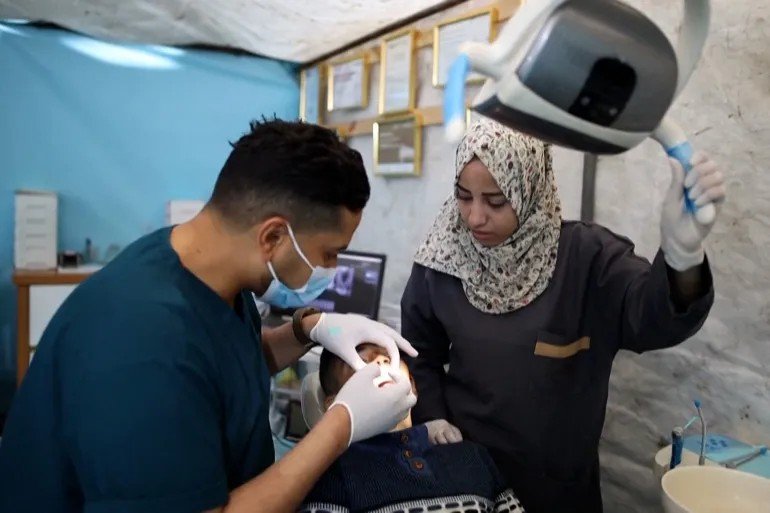
Gaza Herald — In Gaza, even a toothache has transformed into an agonizing crisis. Behind every dental chair sits a healthcare system struggling to find the most basic supplies needed for procedures like fillings, root canals, or extractions. For local dentists, the daily challenge extends far beyond managing patient pain; it has become a desperate struggle to find local anesthesia, filling materials, root canal supplies, functional equipment, electricity, and the financial means to keep their clinics open.
Years of bombardment have damaged dental practices and prosthetic laboratories across the Gaza Strip. At the same time, acute supply shortages and skyrocketing costs have forced hundreds of practices to shut down or severely curtail their services, leaving patients with delayed treatments, temporary pain relief, or care that is completely unaffordable.
The scale of this healthcare collapse was underscored during a recent protest outside the International Committee of the Red Cross office in Gaza, where dozens of dentists gathered to demand the entry of essential medical equipment. Dr. Irfan Ishtiewi, head of the Palestinian Dental Association in the southern governorates, reported that between 500 and 600 of Gaza’s 1,026 pre-war dental clinics have been forced to close due to destruction, operational disruptions, and a total freeze on incoming supplies.
With no new dental materials entering the enclave since 2023, practitioners are exhausting dwindling local stocks. Without anesthetics or temporary fillings, dentists can often do little more than offer immediate, short-term pain mitigation, leaving underlying infections to deteriorate into far more complex medical conditions while patients wait indefinitely for proper care.
Inside his Gaza City clinic, Dr. Mohammad Harzallah has witnessed the rapid contraction of available dental services alongside an unprecedented price surge. According to Harzallah, treatment costs have escalated to more than ten times pre-war levels, driven by the absolute scarcity of supplies, supply chain bottlenecks, and the immense expense of maintaining basic clinic operations. Where patients once accessed routine cosmetic procedures, fillings, and prosthetics, care is now strictly dictated by whatever materials happen to be available on a given day.
This shortage extends deep into dental laboratories responsible for crowns, bridges, and dentures, many of which have been completely destroyed. The remaining facilities face broken machinery that cannot be repaired due to a lack of replacement parts, forcing an increasing volume of complex cases onto a shrinking number of functional clinics and leaving patients to suffer through persistent pain, eating difficulties, speech impediments, and altered physical appearances.
Compounding these material shortages is the near-total collapse of Gaza’s power grid, turning electricity into a costly prerequisite for dental care. Modern clinics require constant power for operating chairs, drills, lighting, and sterilization equipment, forcing dentists to rely on expensive alternative power sources and fuel. Clinic owners are caught in an unsustainable economic trap, absorbing soaring operational costs while serving a population that can no longer afford basic care. This systemic degradation has also halted dental education, leaving students without the materials or practical training needed to complete their studies and threatening the long-term future of the profession.
Ultimately, the crisis demonstrates that the impact of military aggression extends far beyond emergency rooms and destroyed hospitals; it quietly erases ordinary, essential healthcare, leaving displaced Palestinians to endure untreated pain in a collapsing medical system.

