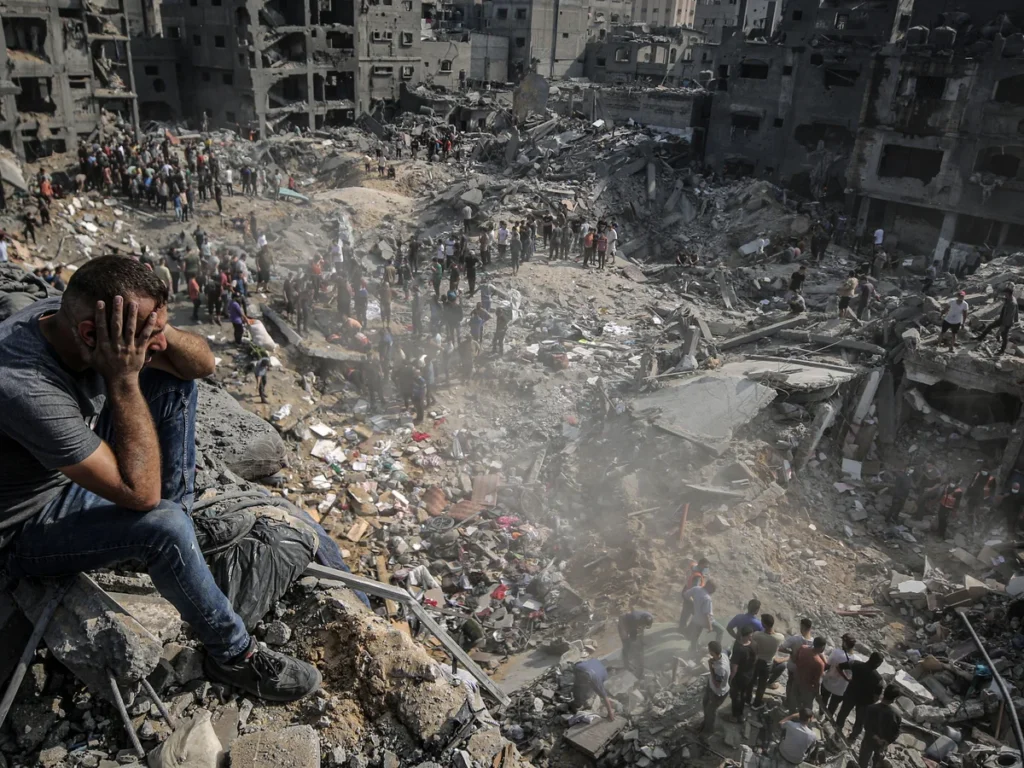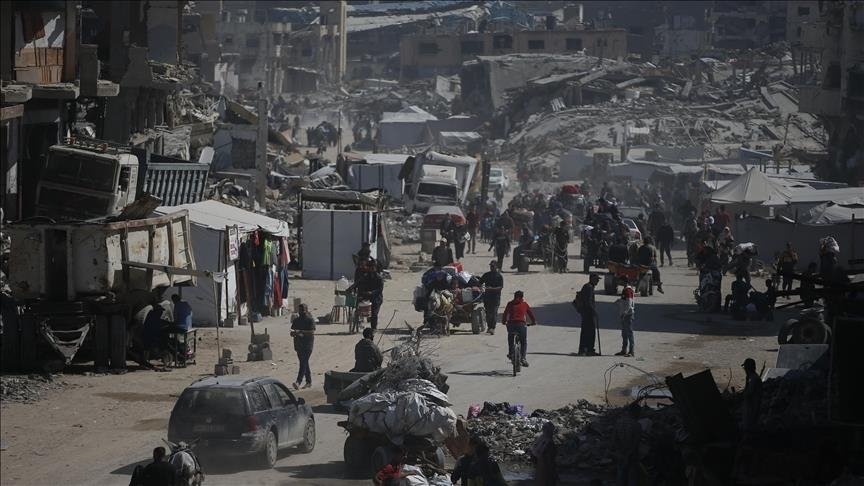
Gaza Herald _The campaign against Gaza has extended far beyond bombs and military operations. It has evolved into a comprehensive strategy targeting nearly every pillar of civilian life, from food and medicine to agriculture, transportation, and trade, in what many Palestinians view as a deliberate effort to make life in the besieged enclave unlivable and force its population from their homeland.
That strategy appears to have entered a new phase after the U.S. House of Representatives tasked Secretary of Defense Pete Hegseth with coordinating with Israel and Egypt on a report outlining measures to secure the Egypt-Gaza border and strengthen what it describes as “international border security.” The report will also map the tunnel network along the Gaza-Egypt frontier, signaling what critics view as another step toward tightening the economic blockade imposed on Gaza since October 7, 2023, under the banner of counterterrorism.
The proposed border security measures mirror initiatives promoted by the United Nations Office of Counter-Terrorism, which focuses on preventing the movement of suspected terrorists, weapons, explosives, and illicit goods across international borders.
For Gaza’s more than two million Palestinians, however, the question is painfully simple: Have food, medicine, and the basic necessities of survival now become security threats?
Although a ceasefire was announced in October 2025, life in Gaza has remained anything but peaceful. Israel established what became known as the “Yellow Line,” an invisible boundary that effectively split the territory in two. In the months that followed, Israeli forces expanded that line until nearly 70 percent of Gaza fell under their effective control.
Today, roughly two million Palestinians are confined to less than one-third of the enclave, just 128 square kilometers, where overcrowding, repeated displacement, and deteriorating living conditions have become daily realities. Reconstruction remains frozen, humanitarian relief has stalled, and the blockade continues to tighten around a population already devastated by war.
Destroying Gaza’s Means of Survival
The economic assault extends far beyond restrictions on movement.
According to available assessments, approximately 96 percent of Gaza’s farmland, greenhouses, and groundwater wells have been destroyed, dismantling the territory’s agricultural foundation. Beth Bechdol, Deputy Director-General of the UN Food and Agriculture Organization (FAO), described the devastation as nothing less than the collapse of Gaza’s entire agrifood system.
FAO has also reported that 95 percent of Gaza’s livestock and more than half of its sheep and goat herds have been wiped out. Meat has virtually disappeared from local markets, while the price of a single chicken has soared from around 30 shekels before the war to nearly 500.
If crops, water wells, livestock, and poultry are destroyed, what purpose does that serve beyond deepening civilian suffering?
Bread has become another casualty of the war.
Israeli attacks damaged or destroyed most of Gaza’s bakeries. Of approximately 140 bakeries operating before the war, only around 50 initially remained functional before all eventually shut down after flour and cooking gas were no longer permitted into the territory.
Flour prices reportedly surged from roughly one dollar per kilogram before the war to nearly fifty dollars, while the price of a loaf of bread climbed from about fifty cents to fifteen dollars.
Meanwhile, thousands of Palestinians have been killed while attempting to obtain food aid through distribution sites operated by the U.S.-backed Gaza Humanitarian Foundation. Images of blood-soaked bags of flour have become defining symbols of Gaza’s humanitarian catastrophe.
If even bread has become unattainable, what remains of the right to life?
Israeli Prime Minister Benjamin Netanyahu has also stated that Israel would permit Gaza residents wishing to leave the territory to do so while expressing support for U.S. President Donald Trump’s proposal to relocate large numbers of Palestinians through what has been described as “voluntary migration.”
For many Palestinians, however, migration under siege, bombardment, starvation, and collapsing living conditions cannot reasonably be described as voluntary.
The Tunnels That Sustained a Besieged Population
For years, the tunnels linking Egyptian and Palestinian Rafah served as Gaza’s economic lifeline.
After Israel imposed its blockade in 2007 and severely restricted movement through the Rafah crossing, the tunnels became alternative routes for food, medicine, fuel, household appliances, vehicles, construction materials, and countless other essentials that sustained daily life. While weapons also moved through the tunnel network, for many Palestinian families the tunnels represented the only remaining gateway to necessities otherwise denied by the blockade.
Following the military overthrow of Egyptian President Mohamed Morsi in 2013, the government of Abdel Fattah el-Sisi launched an extensive campaign to destroy the tunnels, citing efforts to prevent weapons smuggling to armed groups in Sinai.
Human Rights Watch documented the operation in its report Look for Another Homeland, stating that Egyptian authorities demolished the city of Rafah on the Egyptian side of the border, forcibly displaced approximately 75,000 residents, and established a buffer zone extending several kilometers into Sinai.
The organization concluded that the demolitions, destruction of civilian property, and creation of the buffer zone violated international humanitarian law and constituted war crimes.
For Palestinians in Gaza, the story of the tunnels has never been solely about underground passageways. It is about the gradual closure of every remaining route to survival. As borders tighten, farmland disappears, hospitals collapse, and essential goods become increasingly scarce, many Palestinians see not isolated security measures but a broader policy aimed at dismantling the conditions necessary for civilian life. Whether through bombardment, blockade, or economic deprivation, the outcome has remained the same: a population struggling not only to survive war, but to preserve its right to remain on its own land.