
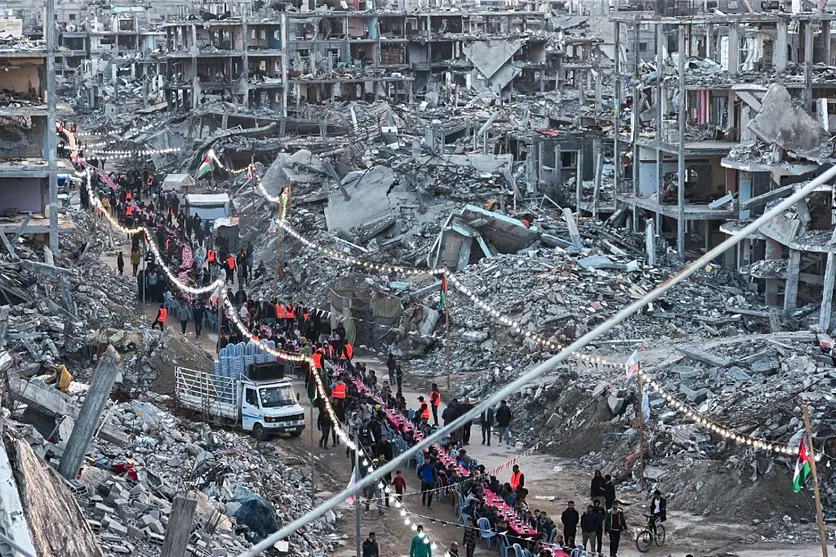
Gaza Herald _As Gaza continues to grapple with the devastating consequences of Israel’s war, new warnings from Doctors Without Borders (MSF) have drawn attention to the deadly impact of militarized aid distribution systems that, instead of providing safety and relief, exposed desperate civilians to violence while they sought food for their families. The organization says the consequences of these operations continue to haunt survivors, many of whom now live with permanent injuries, psychological trauma, and deepening hardship.
Aid Delivery Under Fire
The humanitarian medical organization Médecins Sans Frontières (MSF) has warned against the use of armed aid distribution mechanisms in Gaza, arguing that linking humanitarian relief to military structures exposed civilians to grave dangers and contributed to a pattern of violence that left deep scars across Palestinian society.
According to the organization, many of those injured during food distribution operations continue to live with permanent disabilities and emotional trauma months after the incidents occurred.
An Alternative Aid Network
MSF’s concerns center on the aid system established in May 2025 under the Gaza Humanitarian Foundation, which replaced the United Nations’ previous network of hundreds of aid distribution sites across the Gaza Strip.
The initiative operated with Israeli oversight and support from the United States and other partners. American private contractors reportedly handled security at distribution centers, while Israeli forces maintained military control in surrounding areas.
The program was eventually suspended after a series of deadly incidents that resulted in large numbers of Palestinian casualties at or near distribution locations.
Violence at Food Distribution Points
MSF reported that its medical teams documented at least 32 deaths and treated 1,885 injured people between June and October 2025 at healthcare facilities in Khan Younis.
The organization said the majority of casualties were linked either to live fire incidents or chaotic crowd surges that erupted as civilians attempted to access desperately needed food supplies.
Joanne Thabou, MSF’s head of mission in the occupied Palestinian territory, said people seeking food frequently found themselves exposed to dangerous and unpredictable conditions.
Medical teams treated a wide range of injuries, including gunshot wounds, crush injuries, and breathing difficulties caused by overcrowding and panic during aid distribution events.
Lives Changed Forever
MSF shared accounts from several survivors whose lives were permanently altered.
Kareem, a former barber, suffered severe nerve damage to his leg after being wounded during an incident in which one of his friends was killed.
Another survivor, Mohammed, remains in rehabilitation after sustaining nine gunshot wounds. He described scenes of confusion and panic as civilians came under fire while attempting to collect aid.
Mustafa, a taxi driver displaced from Rafah, lost his teenage nephew in a shooting incident and continues to suffer health complications resulting from his own injuries.
Long-Term Humanitarian Consequences
Beyond the immediate casualties, MSF said many survivors now face a future marked by physical limitations, unemployment, and growing dependence on relief assistance.
Some require ongoing medical treatment and mobility support, while others have lost their ability to earn an income and provide for their families.
The organization warned that these injuries continue to place additional strain on households already struggling under difficult humanitarian conditions.
Social and Psychological Impact
Nicholas Papachrysostomou, MSF’s emergency coordinator in Gaza, said the consequences extended well beyond physical wounds.
He argued that the atmosphere surrounding aid distribution fostered fear, desperation, and competition over scarce resources, further damaging community cohesion and worsening psychological distress among civilians.
According to MSF, the resulting trauma has affected not only those directly injured but also families and communities exposed to repeated violence and uncertainty.
Part of a Wider Humanitarian Crisis
The organization linked the aid distribution model to broader concerns about hunger and deteriorating living conditions in Gaza.
MSF said restrictions on aid access, combined with displacement, destruction of healthcare facilities, and the reduction of distribution points, contributed to worsening food insecurity and malnutrition.
The consequences were particularly severe for vulnerable groups, including pregnant women and young children, who faced increasing health risks amid shrinking access to essential services.
Demanding Accountability
MSF called for an independent investigation into the incidents connected to the distribution system and urged all parties to ensure that humanitarian assistance remains separate from military operations.
The organization referenced a ruling by the International Court of Justice that emphasized the need for unobstructed humanitarian access and the protection of civilians.
MSF concluded by calling on Israel, the United States, and other influential actors to ensure that aid reaches those in need safely, impartially, and in accordance with humanitarian principles, stressing that relief efforts must prioritize civilian protection above all else.

