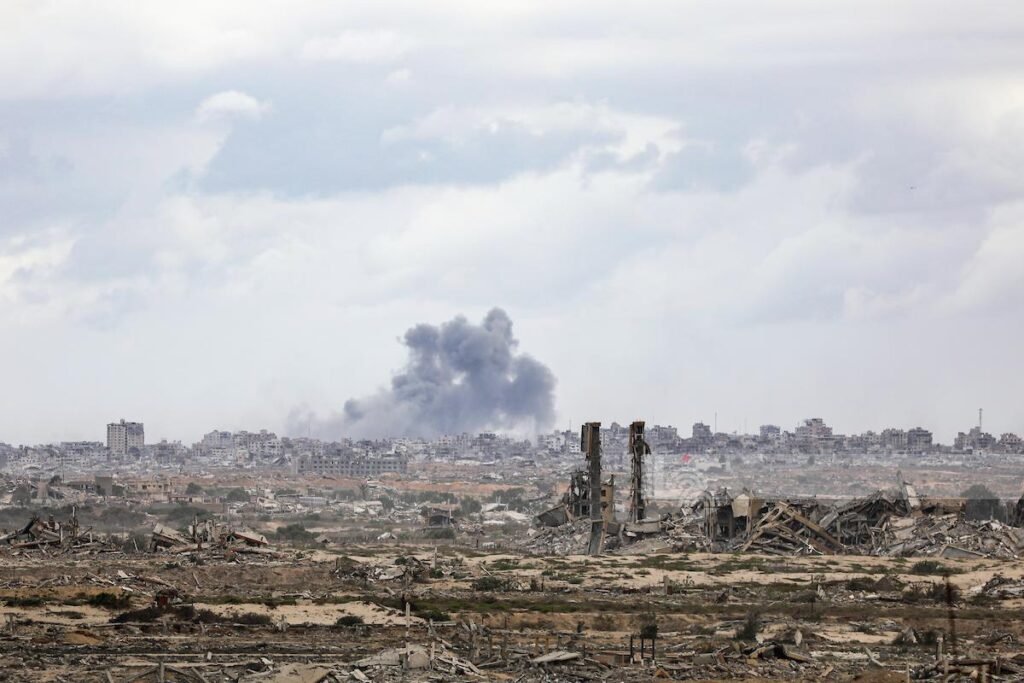
Gaza Herald – More than 86% of agricultural land in the Gaza Strip has been damaged to varying degrees during the recent genocide, according to a new report by the Palestinian Center for Policy and Survey Research, which called for shifting from emergency response toward a sustainable development vision.
The findings were presented in a policy paper titled “Rehabilitating Agricultural Land in Gaza After the 2023-2025 War: Between Risk Removal, Recovery Challenges, and Prospects for Rebuilding the Agricultural System,” prepared by researcher Khaled Abu Amer. The study highlights the extensive destruction inflicted on Gaza’s agricultural sector.
According to the report, the damage extends beyond crops and infrastructure to include soil degradation, water contamination, and broader environmental harm, making recovery significantly more complex than in previous reconstruction phases.
Estimates indicate that over 86% of farmland has been affected, alongside the near-total collapse of water systems and livestock resources, further deepening the crisis in food production.
The paper also reviewed ongoing agricultural rehabilitation projects implemented by local and international actors, noting that most efforts remain limited to land preparation and do not complete full production cycles due to shortages of agricultural inputs, energy, and funding.
It further analyzed past reconstruction efforts in Gaza, identifying a recurring pattern of “partial recovery” that perpetuates vulnerability, largely due to blockade-related constraints, insufficient financing, and the absence of comprehensive environmental solutions.
The report warned of a severe funding gap: current resources cover less than 10% of urgent needs, and the total cost of comprehensive reconstruction exceeds $4.2 billion, posing a serious threat to long-term food security in the strip.
The center emphasized the need for a holistic development approach that integrates economic, environmental, and political dimensions to rebuild Gaza’s agricultural system and strengthen community resilience.