Gaza Herald – The Palestinian Water Authority and the Ministry of Foreign Affairs have issued an urgent international appeal to UN special rapporteurs on human rights and women’s rights, along with other international bodies, warning of an unprecedented escalation in the water and sanitation crisis, particularly in the Gaza Strip.
The appeal stated that the situation has gone beyond a service crisis and has become a systematic pattern of water deprivation, amounting to water starvation, as a result of policies targeting water infrastructure. This, it said, constitutes a serious violation of international humanitarian law and human rights.
According to the Water Authority, repeated attacks on water and sewage systems and the destruction of vital facilities in Gaza have created an extremely dangerous humanitarian situation, threatening civilian lives and undermining their right to safe water, in violation of sovereignty over natural resources and internationally guaranteed rights.
Data cited in the appeal indicate that approximately 2.7 million women and girls in Palestine suffer from water insecurity. In the West Bank, including the east part of occupied Jerusalem, more than one million women and girls do not receive the minimum daily water requirements. Conditions in Gaza are even more severe, falling below internationally recognized “survival water” levels.
The appeal highlighted the compounded humanitarian impact of the crisis, noting that about 80% of Gaza’s population relies on water delivered by trucks due to severe shortages, increasing the physical and time burden, especially on women and girls.
It also pointed out that around 700,000 women and girls face serious challenges in managing personal hygiene in environments lacking privacy and safety, while most households suffer from deteriorating sanitation facilities and overcrowding, further deepening insecurity.
Female-headed households, which make up about 18% of all families, face heightened economic vulnerability, worsening water insecurity. Pregnant and breastfeeding women are also exposed to increased health risks, including dehydration and serious medical complications.
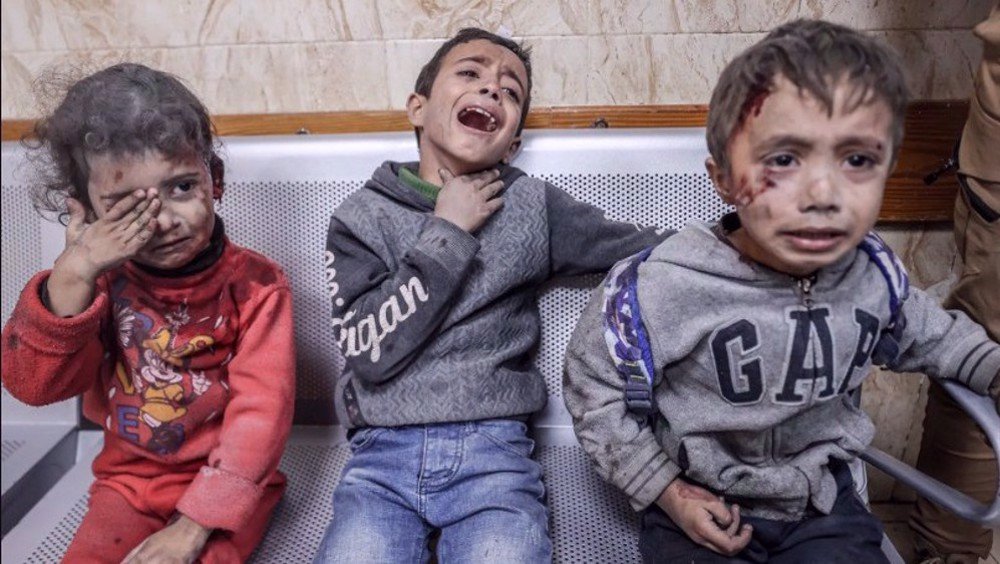
In Gaza, where children under 15 make up about 39% of the population, the decline in water supply has led to a rise in waterborne and hygiene-related diseases. Meanwhile, 77.5% of households rely on children to fetch water, exposing them to health risks and negatively affecting their education.
The appeal stressed that these practices constitute a clear violation of the Geneva Conventions and the Convention on the Elimination of All Forms of Discrimination Against Women (CEDAW), as well as the fundamental rights to water, sanitation, and self-determination.
The Palestinian Water Authority called for urgent international action to halt the humanitarian deterioration by stopping Israeli attacks on water and sanitation facilities, preventing the use of water as a tool of collective punishment or political pressure, and ensuring the protection of such infrastructure under international law.
It also urged support for emergency interventions, recovery, and reconstruction plans, with a strong emphasis on integrating a gender perspective and prioritizing women and girls as the most affected group, alongside strengthening international accountability mechanisms.
The statement concluded by warning that continued international inaction will deepen the humanitarian crisis, widen inequality gaps, and undermine prospects for justice and sustainable development.