Gaza Herald- As Gaza reels from nearly two years of relentless war, Israel has intensified its assault on the besieged enclave, signaling that it is preparing for a full-scale occupation while dismissing a ceasefire proposal that Hamas already accepted. The latest escalation comes despite mounting international concern over the humanitarian catastrophe unfolding in Gaza, where civilians remain the primary victims.
Israeli warplanes unleashed a wave of strikes on northern Gaza on Wednesday, as the government pushed forward with plans to occupy the territory while rejecting diplomatic efforts to halt the bloodshed.
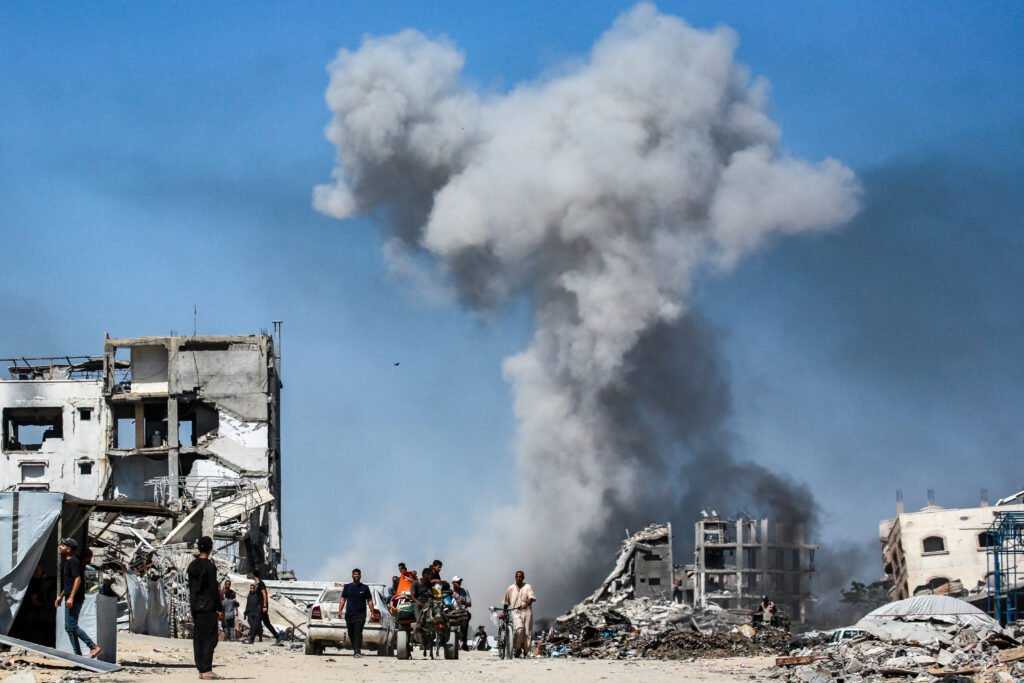
The overnight raids targeted residential blocks in Jabalia, leaving entire buildings flattened, dozens of Palestinians dead, and many others wounded, according to local sources.
Health officials reported that at least 35 Palestinians have been killed across Gaza since dawn on Wednesday alone. Among them were at least 10 civilians who lost their lives while waiting in line for desperately needed aid.
On Tuesday night, Defense Minister Israel Katz approved the army’s newest plan to capture Gaza City, submitted by Chief of Staff Eyal Zamir and his senior command.
Israeli Army Radio confirmed that the first stage of the occupation has already begun in the Zeitoun and Jabalia neighborhoods. Meanwhile, Haaretz reported that the military has already started recruiting around 60,000 reservists, with up to 130,000 potentially being mobilized for the large-scale takeover.
Although Israeli officials claim the operation is intended to “dismantle Hamas,” recent shelling has leveled more than 400 homes in Zeitoun alone, further deepening the humanitarian catastrophe.
Mixed Messaging on Ceasefire
Despite Hamas formally agreeing to a ceasefire deal earlier this week, Israeli leaders signaled their intention to dismiss the proposal.
Government spokesperson David Mencer told the BBC that Israel is not interested in what he called “partial deals.” He added, “The situation has changed now. The prime minister has laid out a plan for Gaza’s future.”
The proposal Hamas accepted, aside from a few minor adjustments, was nearly identical to the agreement that had been reached on June 1, before both Israeli and American negotiators abruptly pulled out of talks in Doha.
Even so, while Israel edges closer to a full military takeover of Gaza City and possibly the entire strip, public broadcaster Kan reported that the war cabinet has not completely closed the door on the deal, noting there are “positive” signals.
Prime Minister Benjamin Netanyahu issued vague remarks in a video address on Monday, apparently responding to Hamas’ announcement. “I, like you, hear the reports in the media, and from them one can gather that Hamas is under immense pressure,” he said.
Meanwhile, U.S. President Donald Trump on Monday echoed Netanyahu’s hardline stance, declaring that Hamas must be “confronted and destroyed” before any captives could be released, effectively endorsing Israel’s ongoing escalation and plans for a full occupation of Gaza.
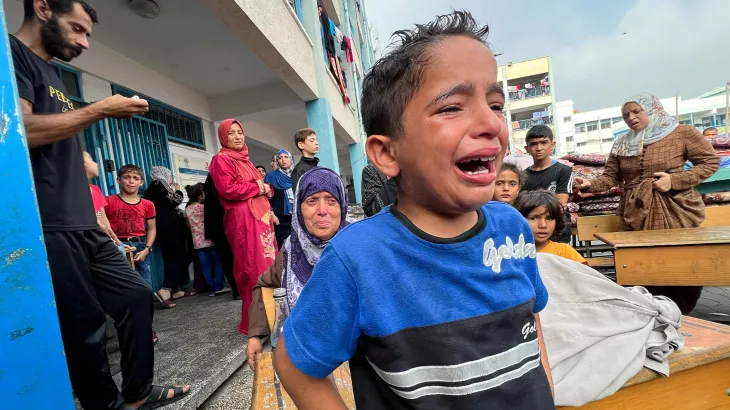
With Gaza’s civilians bearing the brunt of Israel’s military campaign, the widening gulf between ceasefire proposals and occupation plans highlights the stark reality on the ground: bombs continue to fall, homes are demolished, and families are torn apart while political leaders debate the future of the strip. For Palestinians trapped inside the enclave, the promised ceasefire remains out of reach, overshadowed by the looming threat of a complete Israeli takeover.