
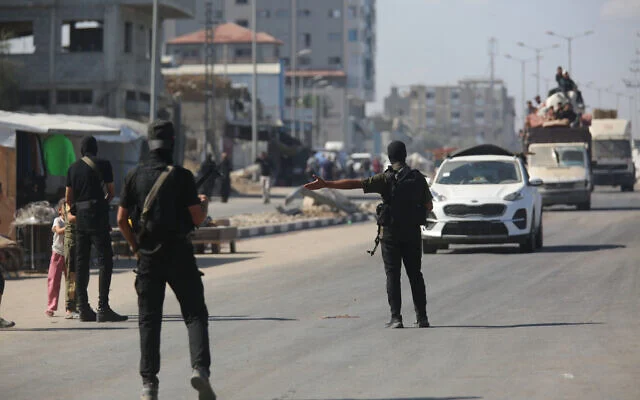
Gaza Herald _ At a busy intersection in Khan Younis, southern Gaza, a traffic officer stands amid constant movement. Cars, carts, and pedestrians move through roads damaged by months of war and disruption.
He raises his hand to guide traffic, makes way for an ambulance, and then instinctively looks upward. In Gaza, attention is no longer fixed only on the streets. Drones remain overhead throughout much of the day, and their sound has become woven into daily life. Many people now react automatically to unexpected sounds by looking to the sky.
For traffic officers, the job has evolved far beyond directing vehicles. Their role has become tied to maintaining a fragile sense of normalcy and keeping movement possible amid destruction, displacement, and ongoing insecurity.
A Junction That Keeps Moving
By morning, traffic in Khan Younis builds quickly. Damaged roads, broken infrastructure, piles of rubble, and overloaded streets shape the daily routine.
Among this scene stands Abu Mohammad, a traffic officer who chose to be identified only by his first name and who has spent hours at his post.
Speaking to our correspondent, he says: “Before the war, organizing traffic was our main responsibility. Now our work covers much more. Sometimes we manage movement for displaced people, sometimes we help ambulances pass, and other times we deal with congestion or try to keep people away from dangerous areas.”
He pauses and looks upward before continuing: “The aircraft are always part of the work. Even when you’re surrounded by vehicles, part of your attention stays in the sky because you never know what might happen next.”
He explains that officers occasionally step away from intersections during periods of intensified drone activity before returning to continue their work.
“There’s no real alternative. People still need help moving through these streets.”
Keeping the Streets Open Despite Risk
In recent months, police personnel and locations across Gaza have repeatedly faced attacks, making public duty increasingly difficult.
A field officer in Khan Younis, speaking anonymously, says: “We understand the danger. Everyone who goes out to work knows the risks. But leaving the streets unmanaged would create even more hardship for people.”
He explains that police work now often extends beyond traffic control, helping open roads, assisting ambulances, and supporting people in crowded areas.
The loss of colleagues continues to weigh heavily on officers, but he says their presence has not stopped.
“Fear exists. But the work continues.”
Families Waiting Through Long Hours
The anxiety does not end when officers leave home.
In a damaged house in southern Khan Younis, the father of one traffic officer spends the day following the news and trying to stay in contact with his son.
“From the moment he leaves, we begin worrying,” he says. “Every nearby explosion makes us call right away.”
He adds that delayed responses during work can make waiting feel endless for families at home.
A Small Sign of Order Amid Uncertainty
Near Nasser Hospital, driver Youssef Abu Sorour says traffic officers have become an important part of daily movement.
“The roads are difficult and everything is crowded. Their presence helps people move more smoothly,” he says. “Sometimes they clear paths for ambulances or help people get through difficult areas. That gives people a feeling that life still has some order.”
Despite everything, the traffic officer remains at his post, directing vehicles, observing the movement around him, and repeatedly checking the sky.
In Gaza, keeping traffic moving has become only one part of a much larger challenge: helping people continue moving through a city where even ordinary routines have become difficult to maintain.

