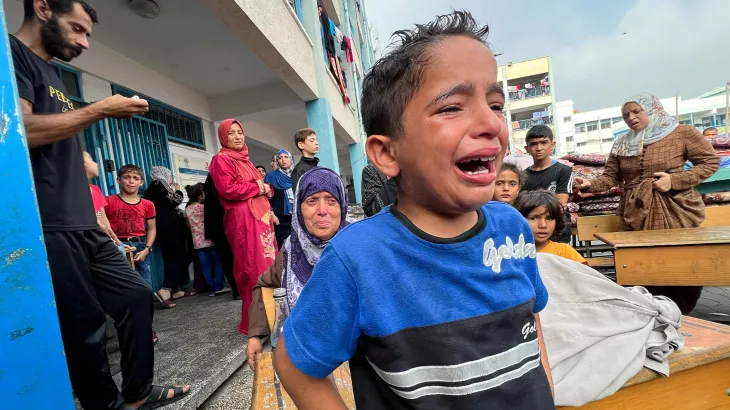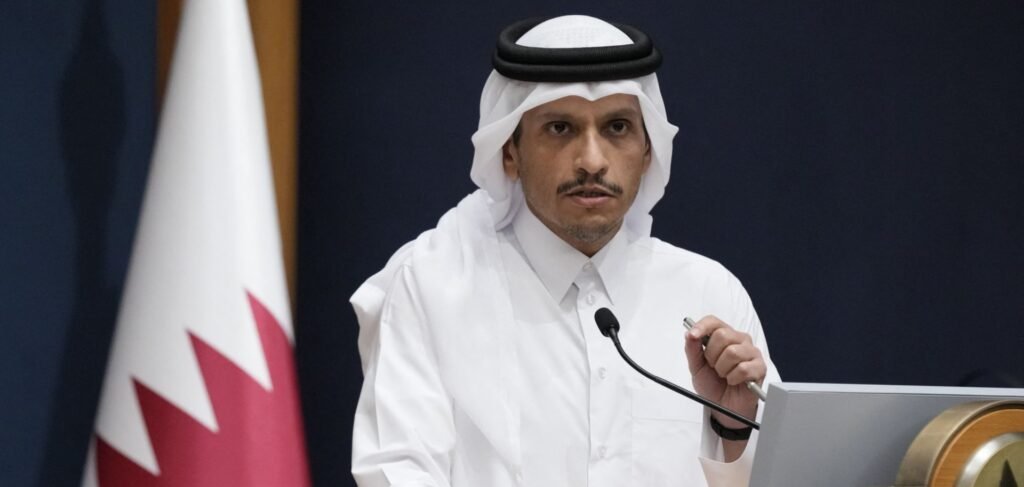
Gaza Herald- Qatar stated that Hamas has reacted positively to a proposed Gaza truce lasting 60 days, but Israel has not given any answer yet.
What are the details of this proposal?
According to Egyptian sources, an agreement was reached to work toward a joint arrangement with the armed forces. The proposal calls for relocating Israeli forces to allow humanitarian aid to enter Gaza and meet the enclave’s urgent needs.
It suggests a temporary truce lasting sixty days. The proposal also stipulates that from the first day, discussions should begin on broader issues related to a comprehensive deal or a permanent ceasefire, following the redeployment of Israeli troops to the border areas, in order to facilitate the entry of aid.
The plan includes the release of nine captives in exchange for the remains of 36 individuals, with 18 bodies to be handed over initially.
Hamas responded positively to the proposal, as did Islamic Jihad, with Palestinian factions in general engaging constructively with the plan.
Diaa Rashwan, head of Egypt’s State Information Service, said that Egypt and Qatar put forward this proposal for approval. He explained that Hamas and other Palestinian factions responded without reservations. From these statements, it is understood that moving forward with the deal depends on accepting and affirming this proposal.
The Egyptian foreign minister noted that all sides that examined the proposal raised obstacles similar to those that had previously complicated the process—such as the mechanisms for aid delivery and the presence of Israeli forces inside Gaza.
Cairo witnessed intense political activity over the Gaza crisis, coinciding with the presence of Sheikh Mohammed bin Abdulrahman, Qatar’s prime minister and foreign minister, along with the Palestinian leadership, after the failure of the Rafah crossing. This underlined the significance of Cairo’s diplomatic efforts at this time.
In recent days, Egypt has intensified its consultations, receiving Qatar’s prime minister and foreign minister, the Palestinian prime minister, and also engaging with American officials to emphasize several key points.
The first is securing guarantees to ensure that the deal’s terms are implemented without delay, should both Palestinians and Israelis agree to the proposal.
The second is exerting pressure for an immediate ceasefire in Gaza, ensuring the uninterrupted supply of fuel, and providing urgent humanitarian aid without obstacles. This would be accompanied by the release of hostages and prisoners. Egypt also stressed its absolute rejection of any attempt to reoccupy Gaza or forcibly displace its people.
Palestinian Prime Minister Mohammad Mustafa has been preparing to establish a specialized committee focused on reconstruction in Gaza soon.
President Abdel Fattah el-Sisi, along with Egyptian, Qatari, and Palestinian officials, reaffirmed that the establishment of an independent Palestinian state with East Jerusalem as its capital, recognized under international legitimacy, is the only viable path to achieving lasting peace in the Middle East.
The Egyptian president also announced a new international conference in Cairo on reconstruction, in cooperation with the Palestinian Authority and the United Nations.
Finally, it is notable that Egypt seeks to send a clear message: Rafah crossing will not be closed, and any obstruction of aid delivery is entirely the responsibility of Israel.