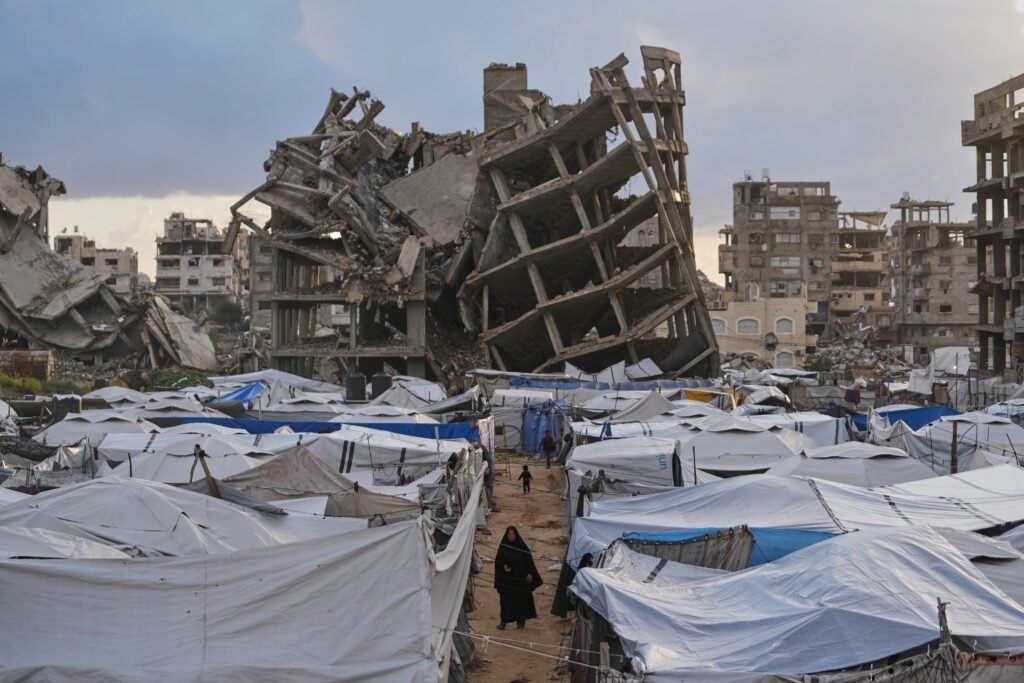
Gaza Herald — Gaza’s first major winter storm flooded or damaged approximately 70,000 tents within 12 hours, forcing thousands of displaced Palestinian families to flee waterlogged camps as Civil Defense crews received more than 1,500 emergency calls.
More than half a million children across the Gaza Strip are now facing their fourth consecutive winter amid mass displacement, with many living in deteriorating tents or structurally unsafe makeshift shelters.
With heating supplies severely limited and humanitarian deliveries constrained by Israeli restrictions, some families have resorted to burning plastic, tires, and household waste to cook food or keep warm, exposing children to toxic fumes and the risk of accidental fires.
As nighttime temperatures fall to approximately 41 degrees Fahrenheit (5 degrees Celsius), children face another winter of sleeping on damp bedding, wearing soaked clothing, and struggling to stay warm.
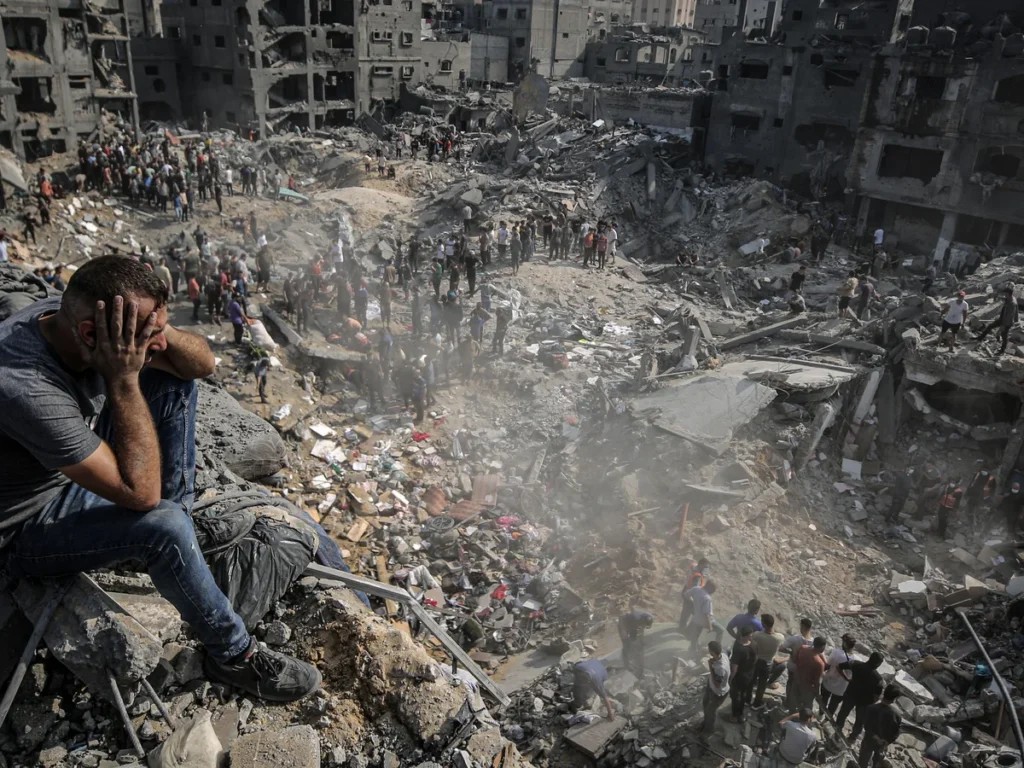
Hundreds of thousands of displaced Palestinians remain crowded into makeshift shelters or damaged concrete buildings weakened by Israeli bombardment, leaving them vulnerable to further flooding, strong winds, and structural collapse.
More Than 560,000 Children Face Critical Shelter Conditions
A recent assessment by the Shelter Cluster found that approximately 58% of Gaza’s population, or 1.2 million Palestinians, including more than 560,000 children, are living in shelter conditions classified as “critical or catastrophic.”
Thousands of families remain in fragile canvas tents and makeshift plastic shelters that have deteriorated after prolonged exposure to harsh weather and repeated displacement.
Many tents have been dismantled and reassembled multiple times as families have been forced to move between overcrowded displacement sites.
Although the ceasefire framework included provisions for improving shelter conditions, restrictions affecting the entry of prefabricated housing units and essential construction materials have limited efforts to provide more durable accommodation.
The Shelter Cluster assessment also found that approximately 48% of surveyed families were resorting to burning plastic, tires, cardboard, or other solid waste for cooking, while 84% reported having no effective or safe means of heating their shelters.
Burning synthetic materials and household waste produces toxic fumes that can cause respiratory problems and increase the risk of carbon monoxide poisoning.
In overcrowded displacement camps with inadequate ventilation, infants and young children face particular risks from smoke exposure, while open flames increase the danger of tent fires.
Israeli Restrictions Delay Winter Supplies as 464,000 Face Flood Risks
Israeli restrictions continue to complicate the entry of essential winter supplies, including weather-resistant tents, heavy-duty tarpaulins, plastic sheeting, thermal blankets, fuel, cooking gas, heating equipment, and construction materials needed to reinforce damaged shelters.
Warm clothing has also become increasingly difficult for many displaced families to obtain.
According to the humanitarian figures cited in the assessment, more than one million Palestinians urgently need winter clothing, while supplies delivered through humanitarian operations have met only around 1% of the identified need.
The shortage has left families struggling to find suitable clothing and blankets for children exposed to cold, wet conditions.
For Gaza’s youngest residents, inadequate shelter and heating can become life-threatening.
During the previous winter, 11 children reportedly died from hypothermia, while many others faced respiratory illnesses and health complications associated with displacement, malnutrition, and exposure to harsh conditions.
Humanitarian mapping also identified more than 464,000 displaced Palestinians living in camps classified as high-risk flood zones.
These include displacement sites in Al-Mawasi, west of Khan Younis, low-lying areas of Deir al-Balah, and vulnerable coastal locations across Gaza City, northern Gaza, and Rafah.
The winter response also faces a major funding shortfall. According to the figures cited in the report, approximately 60% of the $283 million required for winter preparedness remains unfunded.
Save the Children Demands International Pressure to Lift Aid Restrictions
Ahmad Alhendawi, Save the Children’s Regional Director for the Middle East, North Africa, and Eastern Europe, warned that the flooding had devastated families already struggling to survive in inadequate shelters.
“Our staff in Gaza tell us that over the weekend, while families slept, water flooded their tents and engulfed entire camps. Children shivered in the bitter cold without winter clothing, and families lost the few belongings they had left. It is heartbreaking, and it was entirely foreseeable,” Alhendawi said.
He stressed that the emergency was not simply the result of severe weather, accusing Israeli authorities of preventing essential humanitarian supplies from reaching displaced families.
“This is not simply the result of bad weather. Tents, shelter kits, and fuel are waiting at Gaza’s borders while children sleep in floodwater, because the Israeli authorities are blocking their entry. This is a choice, and children are paying the price. More than a year into the so-called ceasefire, it has failed to protect Palestinian children,” he said.
Alhendawi also warned that previous hypothermia-related deaths among children demonstrated the potentially fatal consequences of inadequate winter protection.
“In the past three years, children have died from hypothermia in Gaza. These were completely preventable deaths. As the occupying power, Israel has a legal obligation to ensure civilians receive the supplies they need to survive. Instead, it is depriving families of the most basic means to protect their children, and it must be held accountable for any child deaths that result,” he said.
He urged governments to take concrete measures to ensure humanitarian assistance reaches Gaza without further delays.
“The international community must exert meaningful pressure on the Israeli authorities to open all crossings and allow tents, shelter materials, fuel, and winter clothing to enter without restriction and at the scale needed. Donors must also urgently scale up their support, including for UNRWA, the backbone of the humanitarian response.”
The appeal comes as displaced families face further winter storms with inadequate shelter, depleted supplies, and limited access to heating.
For hundreds of thousands of Palestinian children living in damaged tents and overcrowded displacement camps, the delivery of winter assistance remains an urgent matter of safety and survival.