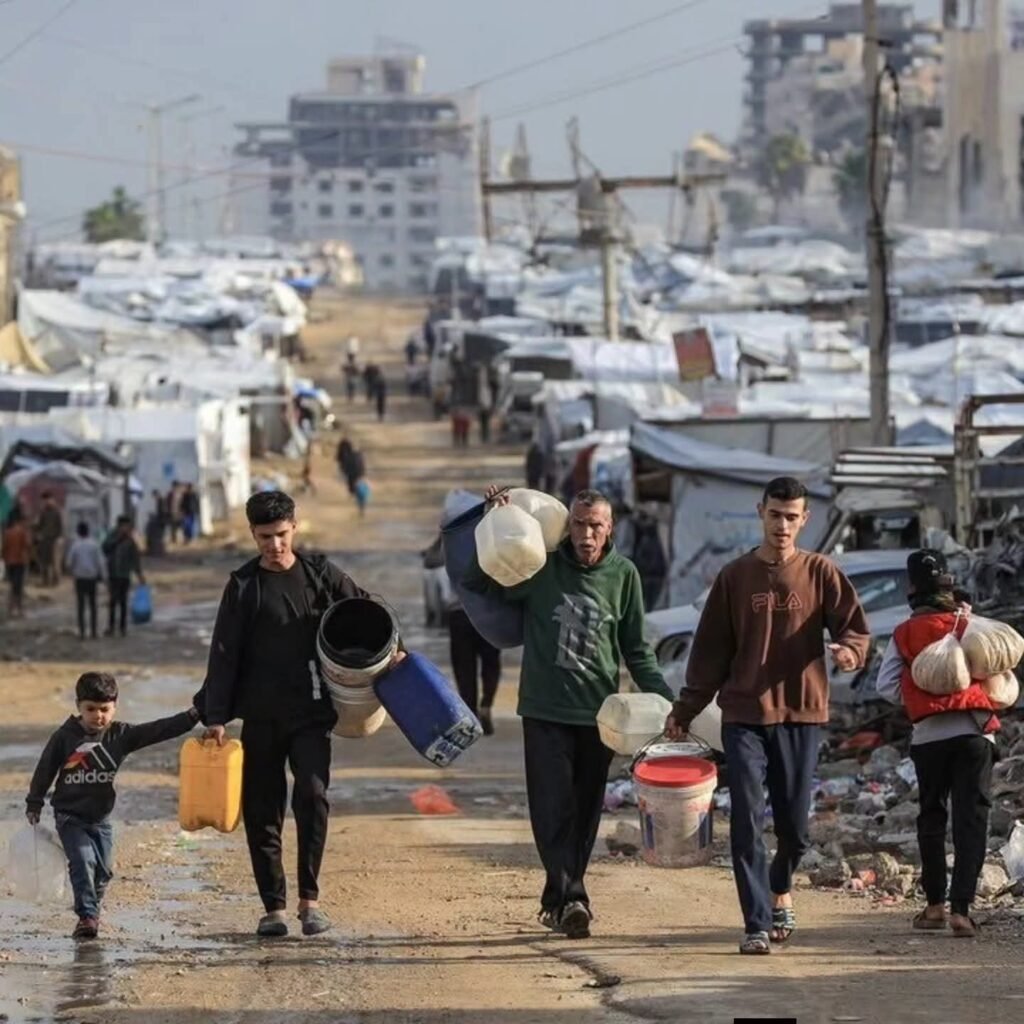
Gaza Herald — Approximately 350,000 displaced Palestinians have been left exposed to heavy rain and severe cold after flooding swept through their temporary shelters across the Gaza Strip, according to Dr. Munir al-Barsh, director general of Gaza’s Ministry of Health.
In a statement Sunday, al-Barsh warned that hundreds of thousands of displaced residents were sleeping in the open after torrential rainfall inundated displacement camps, leaving families without adequate protection from worsening winter weather.
He questioned the international community’s failure to take urgent action, warning that Palestinian children face growing health risks as temperatures fall and their already fragile living conditions deteriorate.
“What is the world waiting for? Is it waiting for a child to arrive at the hospital with frozen limbs or suffering from dehydration?” al-Barsh asked.
He appealed to international humanitarian and human rights organizations to intervene immediately to protect children in displacement camps, secure the opening of border crossings, and ensure the entry of tents, winter supplies, and construction materials.
Al-Barsh said thousands of humanitarian tents remained stranded outside Gaza’s border crossings because of Israeli restrictions, even as approximately 350,000 displaced Palestinians faced exposure to heavy rainfall and cold weather.
Deadly Sand Embankment Collapse Highlights Growing Dangers
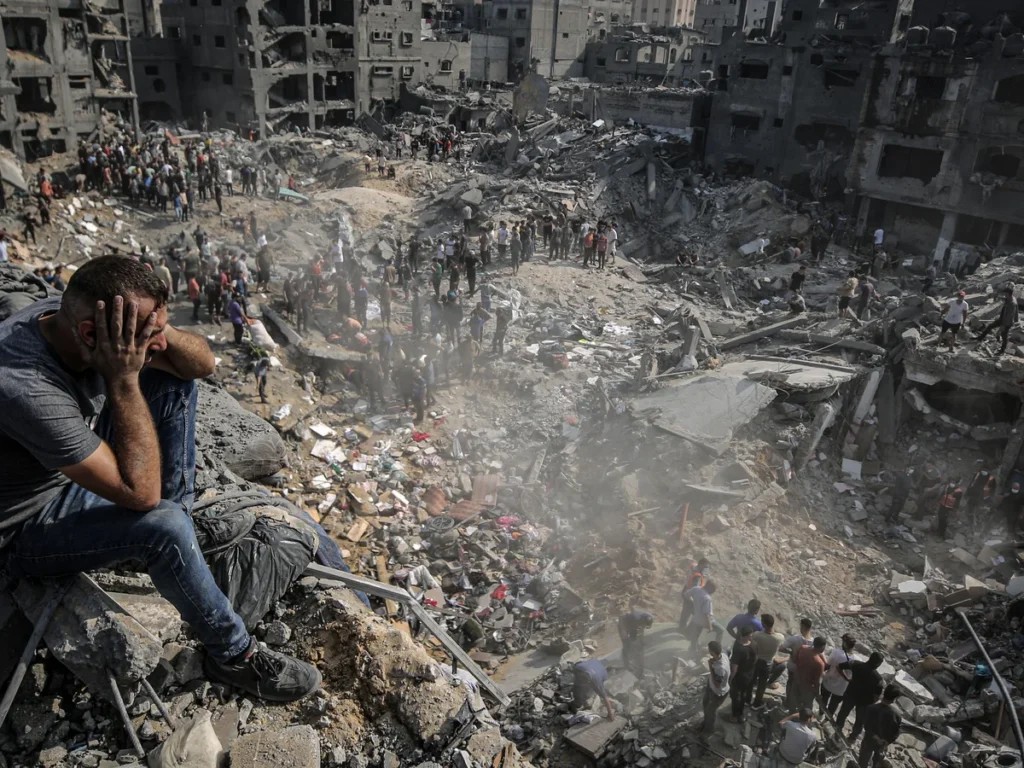
The dangers facing displaced families became tragically apparent Sunday when a large sand and rock embankment collapsed onto tents sheltering Palestinian families in Deir al-Balah, central Gaza.
The collapse killed five Palestinians and injured several others, according to local reports.
Gaza’s Civil Defense Directorate said rescue teams continued searching for people believed to be trapped beneath the collapsed earth and debris.
The incident underscored the risks facing families living in makeshift camps near unstable slopes and damaged infrastructure, particularly during periods of heavy rainfall.
Since Friday evening, a powerful low-pressure weather system has brought torrential rain and strong winds to Gaza, flooding displacement camps and damaging temporary shelters across the territory.
Many displaced Palestinians have been forced to live in deteriorating fabric tents that provide little protection against water, wind, or falling temperatures.
According to Gaza’s Government Media Office, approximately 70,000 displacement tents were flooded during the first 12 hours of the storm.
Heavy rainfall also caused the partial collapse of several concrete walls weakened by previous Israeli bombardment, resulting in injuries across the Strip.
Civil Defense Struggles With Flooding and Structural Collapses
On Saturday, Gaza’s Civil Defense Directorate reported that entire displacement camps had been inundated, with floodwaters reaching depths of up to 1.5 meters in some low-lying areas.
Emergency crews responded to incidents involving damaged residential structures and walls that had become increasingly unstable during the storm.
Although no deaths were reported in the initial building-collapse incidents, officials warned that thousands of structures damaged during the war remained at risk.
Rainwater seeping into cracked walls and foundations can further weaken already compromised buildings, increasing the possibility of sudden structural failure.
The danger is particularly severe for displaced families who have returned to damaged homes because they cannot find safe alternative accommodation.
Civil Defense teams have also faced major shortages of rescue equipment, heavy machinery, and emergency supplies, limiting their ability to respond to flooding and structural collapses.
Israeli Restrictions Obstruct Emergency Shelter Efforts
The latest storm has struck Gaza amid a prolonged humanitarian crisis following years of Israeli military operations that have devastated residential neighborhoods, drainage systems, roads, and essential public infrastructure.
Although a ceasefire took effect on October 10, 2025, humanitarian organizations and local authorities continue to report severe shortages of shelter materials and equipment needed for reconstruction.
Israeli restrictions on the entry of heavy machinery, construction supplies, and prefabricated housing units have further complicated efforts to provide displaced families with safer accommodation.
The destruction of municipal drainage networks has also increased the vulnerability of displacement camps to flooding, particularly in low-lying and coastal areas.
With tens of thousands of tents already inundated, the need for emergency shelter, dry bedding, warm clothing, and winter supplies has become increasingly urgent.
Health Officials Warn of Risks to Children
Gaza’s health authorities have warned that prolonged exposure to cold, damp conditions, and overcrowded shelters could increase the risk of respiratory illnesses and other health complications, particularly among children.
Families whose tents have flooded often lack dry mattresses, blankets, and clothing, leaving children exposed to cold weather for extended periods.
Al-Barsh urged the international community to act before the humanitarian emergency results in further deaths and serious illness.
He stressed that protecting displaced families requires more than emergency medical treatment. It also demands the immediate provision of safe shelter and the removal of restrictions preventing essential supplies from reaching Gaza.
As winter storms continue to batter the Strip, hundreds of thousands of displaced Palestinians face dangerous conditions in flooded camps, while health officials warn that delays in providing adequate shelter could have devastating consequences for children and other vulnerable residents.