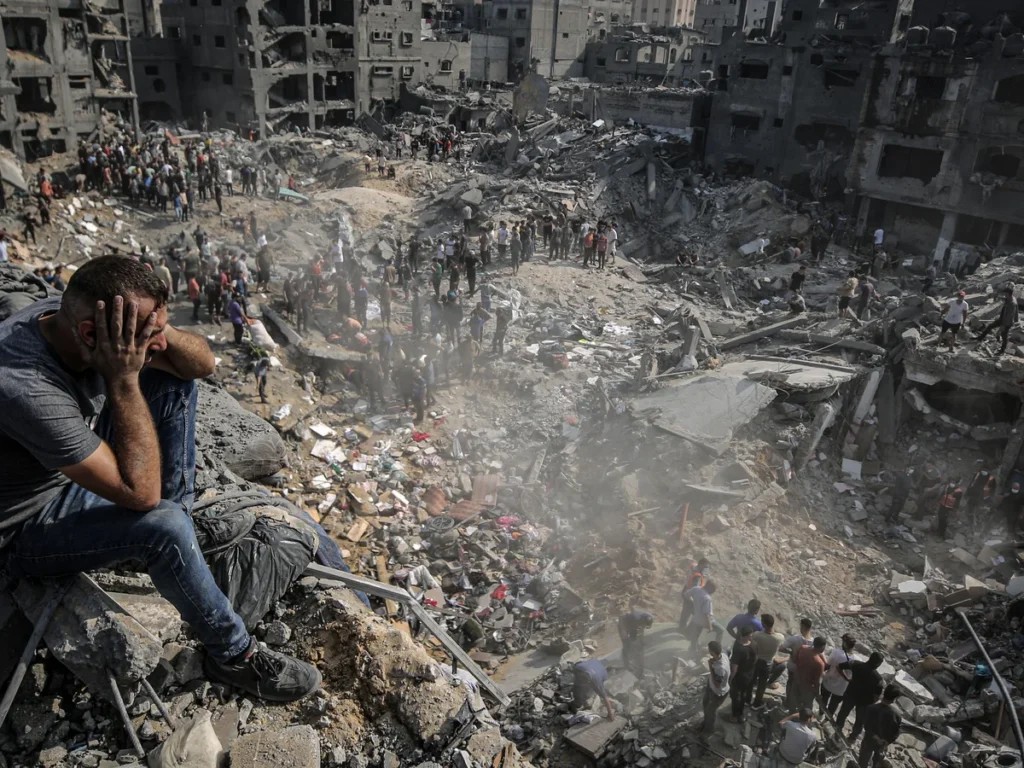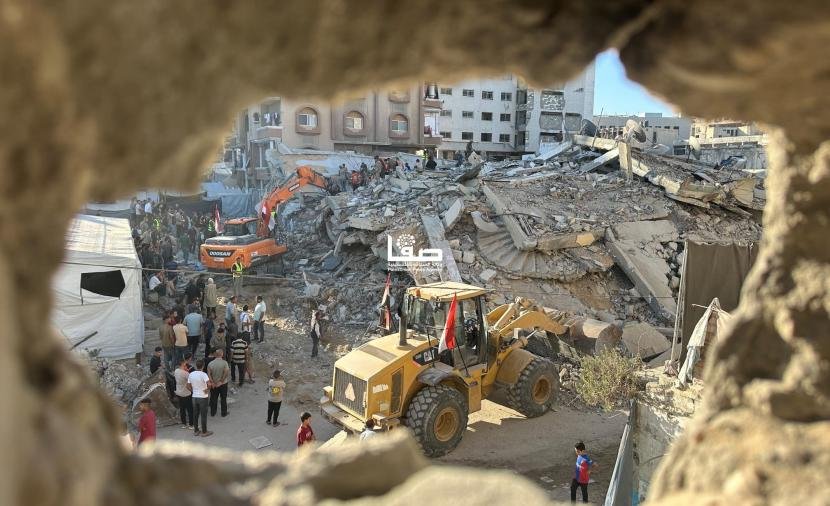
Gaza Herald — Israeli military operations have left the Gaza Strip facing an environmental catastrophe, with up to 68 million tons of rubble, widespread agricultural destruction, and severe damage to water and sewage infrastructure threatening Palestinian lives and livelihoods for generations, according to the Palestinian Environment Quality Authority.
In a statement issued Friday to mark the International Day for Preventing the Exploitation of the Environment in War and Armed Conflict, the authority warned that between 61 million and 68 million tons of debris have accumulated across Gaza following extensive Israeli bombardment.
The rubble includes an estimated four million tons of hazardous waste and at least 50,000 tons of asbestos or asbestos-containing materials, according to the authority.
Asbestos is a known carcinogen that can pose serious long-term health risks when damaged building materials release microscopic fibers into the air.
The authority warned that the enormous volume of potentially contaminated debris, combined with the destruction of essential infrastructure, has created a major environmental and public health emergency requiring urgent international intervention.
Gaza’s Agricultural Land and Water Infrastructure Devastated
According to the Palestinian Environment Quality Authority, Israeli military operations have damaged or destroyed approximately 82% of Gaza’s agricultural land and 97% of its olive trees and other fruit-bearing trees.
The destruction has severely undermined Palestinian food production, agricultural livelihoods, and the ability of farming communities to recover.
The authority also reported that approximately 84% of Gaza’s water and sewage infrastructure has been damaged or destroyed, leaving large parts of the territory without adequate sanitation services.
As a result, an estimated 120,000 cubic meters of untreated sewage are discharged daily into the environment, according to the authority.
The collapse of wastewater systems has increased the risk of contamination in residential areas and surrounding water resources, raising concerns about waterborne diseases and long-term environmental damage.
Environmental officials warned that the combination of hazardous rubble, damaged sewage networks, and destroyed agricultural land could have consequences extending far beyond the immediate humanitarian crisis.
760 Environmental Attacks Documented in the Occupied West Bank
The Palestinian Environment Quality Authority said it documented 760 attacks and violations affecting natural resources and environmental infrastructure in the occupied West Bank between January and September 2026.
The reported incidents involved Israeli forces and settlers and affected agricultural land, forests, vegetation, water resources, livestock, and essential infrastructure.
According to the authority, 203 incidents targeted agricultural land and nature reserves.
These included the bulldozing of olive groves, the construction of roads serving Israeli settlements, the fencing off of Palestinian land for settlement outposts, and the seizure of thousands of dunams through military orders and other Israeli measures.
The authority warned that such practices have restricted Palestinian access to agricultural land and contributed to the loss of vital natural resources.
Thousands of Olive Trees Uprooted, Agricultural Losses Reach $67 Million
The report documented 178 attacks against forests and vegetation, including the uprooting and destruction of trees and the burning of agricultural fields.
According to the authority, approximately 100,000 olive trees were uprooted or destroyed, with reported agricultural losses estimated at $67 million.
The attacks also included the burning of wheat and barley fields, further damaging Palestinian agricultural production and food security.
Olive cultivation remains an essential source of income for many Palestinian families and an important part of the West Bank’s agricultural economy.
The authority warned that the destruction of trees and farmland threatens both immediate livelihoods and the long-term sustainability of Palestinian farming communities.
Hazardous Waste and Damage to Water Resources
The authority also documented 185 incidents involving waste and hazardous demolition materials, particularly in Jenin and Tulkarem governorates and their refugee camps.
According to the report, thousands of tons of rubble containing metals, plastics, and other potentially hazardous materials have accumulated in affected areas.
Palestinian environmental teams also reported intercepting attempts to transport waste from Israel into the occupied West Bank for unauthorized disposal.
The seized materials reportedly included 40,000 kilograms of street-cleaning waste and 1,816 kilograms of medical waste and expired materials intended for disposal in Qalqilya and Tulkarem.
Additional documented incidents included 52 attacks affecting food security and livestock, 37 targeting water sources and wells, 35 damaging water supply and irrigation networks, and five affecting sewage systems.
The authority warned that these incidents have placed further pressure on Palestinian communities already facing restrictions on access to land, water, and essential services.
Palestinian Authority Calls for International Accountability
The Palestinian Environment Quality Authority characterized the reported destruction and environmental violations as environmental war crimes, warning that their consequences threaten Palestinian health, food security, and access to natural resources.
It called on the international community to uphold its legal responsibilities, take action to halt the violations, and ensure accountability for damage to the environment and civilian infrastructure.
The authority also demanded an end to the Israeli occupation and the protection of Palestinians’ right to manage, preserve, and benefit from their natural resources.
It warned that without urgent intervention, the destruction of agricultural land, water systems, and environmental infrastructure could undermine Palestinian communities’ ability to rebuild and sustain their livelihoods for years to come.