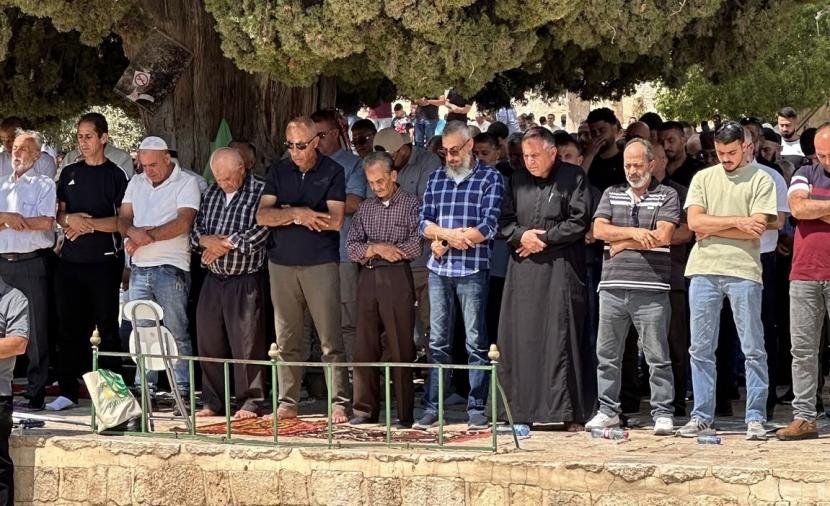
Gaza Herald – Tens of thousands of Palestinians performed Friday prayers at the Al-Aqsa Mosque, despite the tight restrictions and security measures imposed by occupation forces on those entering Jerusalem. The Islamic Affairs Department in Jerusalem stated that tens of thousands of worshippers attended the prayer.
According to a Sana correspondent, occupation forces enforced strict controls on the movement of worshippers approaching the holy site through military checkpoints surrounding the city. These measures significantly limited access for many individuals seeking to participate in the religious gathering.
The correspondent noted that troops prevented dozens of young men from reaching the mosque after detaining them at barriers and iron gates encircling Jerusalem and the Old City. These security operations targeted individuals attempting to cross into the restricted zones near the holy site.
The report highlighted the ongoing tension between Palestinian worshippers and Israeli security personnel during religious observances. The presence of heavy security apparatuses around the perimeter has become a standard feature of Friday gatherings at the site.
Islamic authorities continue to monitor attendance figures closely, emphasizing the resilience of Palestinian residents in maintaining their religious practices despite external pressures. The department’s statement served as an official confirmation of the large turnout observed throughout the day.
Security sources have not provided specific details regarding the number of arrests or the exact nature of the restrictions beyond general statements about maintaining order. However, local witnesses described scenes of congestion and delayed entry for many pilgrims.
The event underscores the persistent friction over access rights and security protocols at one of Islam’s holiest sites. Community leaders have repeatedly called for the removal of obstacles hindering free movement to the mosque.
Observers note that such gatherings often serve as a focal point for expressing political grievances alongside religious devotion. The scale of participation reflects deep-seated commitments to the site among the local population.
International attention remains fixed on the situation in Jerusalem, with various diplomatic entities monitoring developments closely. The outcome of these interactions continues to influence broader regional stability assessments.
Local media coverage focuses heavily on the logistical challenges faced by attendees, including transportation disruptions and prolonged waiting times at entry points. These practical difficulties add another layer of complexity to the annual cycle of religious events.
The Islamic Waqf maintains its role as the primary administrator of the site, coordinating with relevant authorities to facilitate worship while navigating complex security realities. Its statements carry significant weight in shaping public understanding of daily occurrences.
Residents express frustration over what they perceive as disproportionate interference in their religious lives. This sentiment fuels ongoing dialogue about civil liberties and freedom of movement within the occupied territories.
As evening approaches, the atmosphere gradually shifts from active worship to reflection on the day’s events. Many participants leave with renewed determination to preserve their heritage and rights against perceived encroachments.
This report was produced in the Gaza Herald newsroom.