Gaza Herald _In Gaza, death no longer knocks on doors. It follows Palestinians through streets, homes, workplaces, and the few remaining spaces where people seek safety. Every day, police officers continue to report for duty, carrying the responsibility of maintaining order in a society exhausted by war, while knowing that the road to work may become the road they never return from.
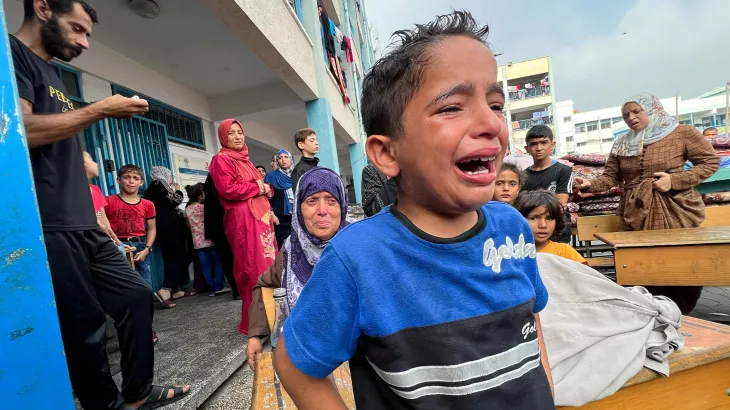
Earlier Wednesday, an Israeli strike hit a police facility in Gaza City, killing several police officers and personnel as well as a 13-year-old displaced girl who was in the area. The attack once again exposed the enormous price paid by those working to maintain public security and prevent further chaos across the besieged enclave.
Officers Killed While Carrying Out Their Duties
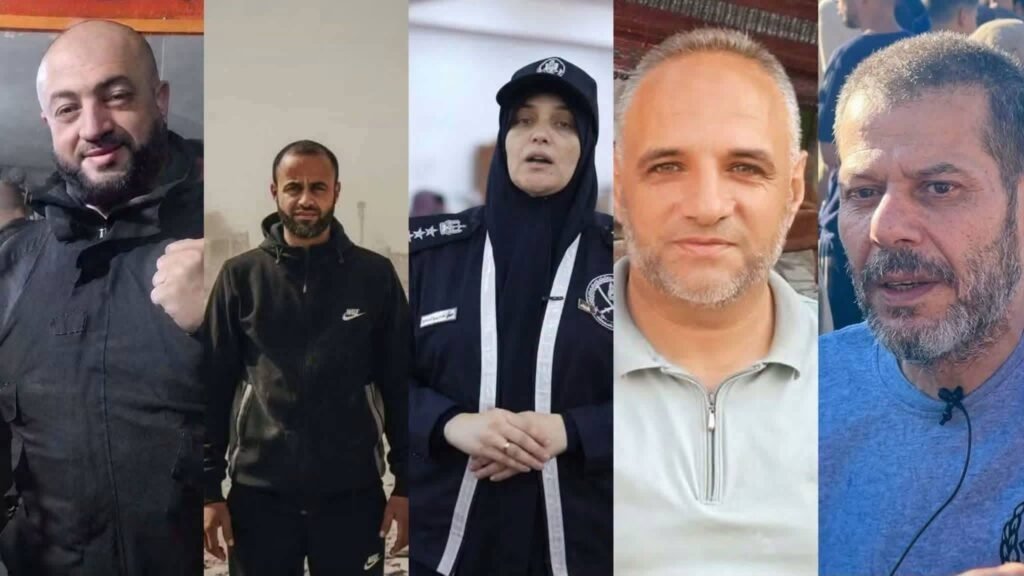
Gaza’s Ministry of Interior and National Security mourned a group of police officers killed in the strike.
Those killed included Brig. Gen. Ayman Mahmoud Jundiya, acting director of Gaza City Police; Col. Osama Hashem al-Hajain, director of operations for Gaza City Police; and Col. Fatena Abdel Jabbar al-Sahhar, director of the Women’s Police Department in Gaza.
The list also included Col. Ibrahim Abdel Rahman Tamraz, Col. Alaa Ali Alyan, Lt. Col. Hazem Jabr Khalaf, Maj. Othman Shehata Abu Samaan, and Lt. Samaher Misbah Hamada.
Also killed was Dana Haitham al-Jamasi, a 13-year-old displaced girl who had been in the vicinity of the targeted facility.
The Ministry of Interior condemned the attack as a “brutal massacre,” saying the killing of police officers was part of a broader pattern of targeting Gaza’s civilian police personnel. The ministry said eliminating the police force further undermines public order and creates conditions for greater instability across the enclave.
Police Under Fire
Throughout the war, Gaza’s police have not been operating under ordinary security conditions. Officers have faced the dual burden of responding to the needs of a population living through bombardment, displacement, and siege while attempting to maintain a basic level of order in streets where entire neighborhoods have been reduced to rubble.
Police officers reporting for duty are not simply carrying the responsibility of enforcing laws and maintaining public security. They are doing so without the basic conditions required for safe work, amid ongoing attacks and a constant threat to their own lives and those of their families.
Bassem Naim, a member of Hamas’ political bureau, said the attack on the police facility and the killing of its personnel sent a message that Israel was acting “above the law.” He said the attack also carried a message to international actors and mediators involved in the ceasefire process.
Targeting Gaza’s Stability
Ismail al-Thawabta, director general of Gaza’s Government Media Office, warned that the growing number of attacks could undermine the ceasefire, saying Israel was working to weaken the agreement on a daily basis.
He questioned the role of mediators, guarantors, the UN Security Council, and the Board of Peace as violations continue, stressing that regional stability cannot be built around agreements whose provisions are repeatedly violated without consequences.
Journalist Ibrahim al-Madhoun said the targeting of Palestinian police leadership should be viewed within a broader attempt to derail the political process and impose new realities by force.
He said targeting institutions responsible for public security and organizing daily life strikes at one of the main pillars of stability in Gaza.
Al-Madhoun warned that weakening the police and creating conditions for lawlessness, internal violence, and social fragmentation would serve Israel’s interests. He called for greater public support for the security services, respect for law and public order, and stronger measures to protect police personnel and preserve their ability to perform their duties.
“A Salary After 100 Days, a Funeral Before the Paycheck”
Behind the names and ranks listed in official statements are personal stories that rarely appear in formal announcements.
Fatima Youssef wrote about police officers working under extraordinarily harsh conditions while waiting for modest salaries that can arrive weeks or even months late. Despite that uncertainty, they cannot afford to wait for safer conditions before reporting for duty.
“A salary after 100 days… and a funeral before the paycheck,” Youssef wrote, capturing the painful reality facing many police officers in Gaza.
For these officers, the greatest reward is not a salary or promotion. It is simply making it home alive.
A person who leaves for work in the morning may never return that evening, leaving behind a mother, wife, children, debts, and a life abruptly cut short.
That raises a question far greater than wages or working conditions: What does it mean to carry the responsibility of protecting others when you have no guarantee that you will make it home to your own family?
Even the Sea Is No Longer a Refuge
In Gaza, Israeli attacks have not been limited to workplaces. They have also reached the places Palestinians once sought out for a brief escape from the pressures of war.
Journalist Mohammed Haniyeh highlighted the targeting of spaces that once offered Gaza’s residents a rare opportunity to breathe, asking where Palestinians can go when they simply want to spend an hour outside the war.
The sea, once one of Gaza’s last remaining outlets for relief, has come under attack. Parks are no longer beyond the reach of bombardment. Tents become unbearable under the summer heat, homes have been reduced to rubble, and streets have become landscapes marked by death.
The question is no longer simply where Palestinians can flee from death, but whether there is anywhere left for them to go at all.
A War Crime and a Message to Mediators
Hamas said the attack on the police facility in Gaza City, which killed nine people, most of them police officers and personnel, and wounded others, constituted another “war crime.”
The group rejected Israel’s description of the target as a resistance leadership site, saying such statements were being used to justify attacks on civilian police personnel and Palestinians in Gaza.
Among the ruins of the targeted facility, the names of the officers mourned by Gaza’s Interior Ministry, and the story of a displaced 13-year-old girl killed nearby, lies a broader picture of a police force operating in one of the most dangerous environments in the world.
Men and women continue reporting for duty in a society struggling to preserve whatever remains of ordinary life and public order, even as the threat of death follows them at every turn.
Fallen Officers: When Maintaining Order Becomes a Fight for Survival
Political disagreements over institutions and their role cannot erase the human reality behind each death.
When a police officer is killed while carrying out duties related to public security in a society consumed by war, a family does not simply lose an employee. It loses a father, son, husband, daughter, or loved one who was expected to come home.
In Gaza, where destruction continues to spread across homes, streets, and the few remaining spaces where people can seek relief, maintaining public order and preventing further chaos has itself become part of the struggle to survive.
The police officers killed while carrying out their duties leave behind more than names and ranks. Their deaths raise a deeper question about the fate of a society fighting to preserve its cohesion amid a war that has devastated homes, destroyed public spaces, and now increasingly targeted those tasked with protecting civilians and maintaining basic order.