
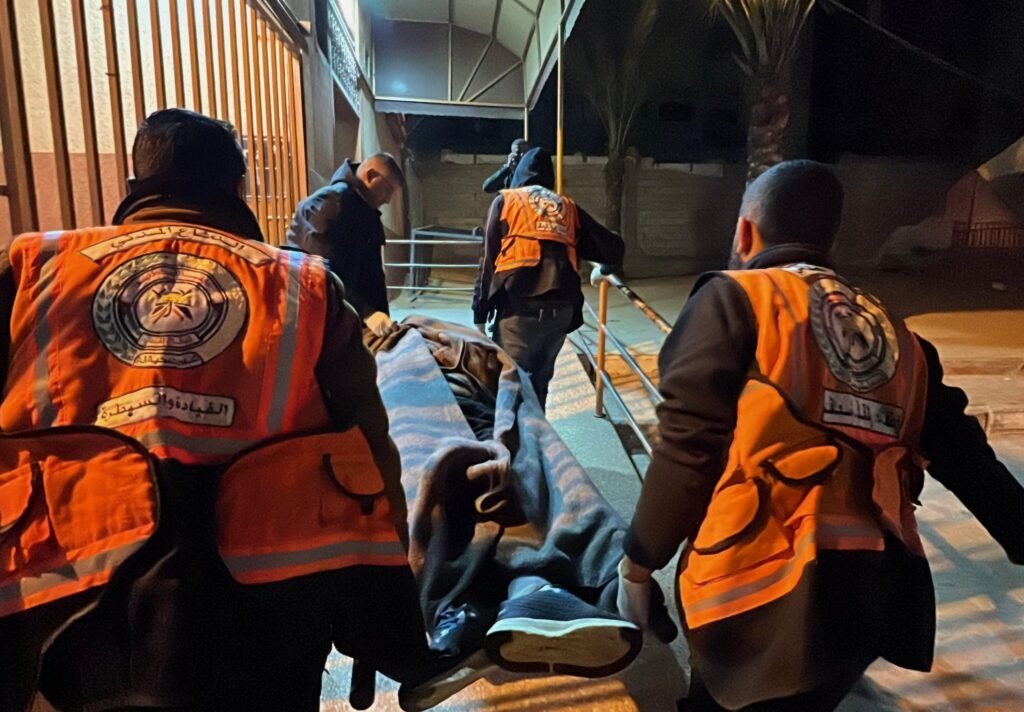
Gaza Herald _Despite international discussion of ceasefire efforts and expanding humanitarian aid, conditions inside Gaza remain devastating, according to an experienced humanitarian aid worker who recently completed a field mission in the territory. After spending two weeks assessing aid operations, hospitals, and humanitarian needs, the aid worker said the destruction, displacement, and daily violence paint a far different picture from the one many people see abroad.
The aid worker requested anonymity due to concerns about possible retaliation from Israeli authorities.
A Landscape of Destruction
Entering Gaza through the Kerem Abu Salem (Kerem Shalom) crossing, the aid worker traveled through Rafah before continuing north toward Khan Younis.
They described entire neighborhoods that had been reduced to rubble, saying it was difficult to imagine that thriving communities had once existed there.
According to the aid worker, widespread bulldozing across parts of Gaza appeared to have erased entire residential areas, leaving behind what they described as overwhelming devastation.
Assessing Humanitarian Needs
During the mission, the aid worker visited medical clinics, hospitals, schools, and an orphanage while evaluating humanitarian programs operated by an international medical organization.
The assessment included meetings with wounded civilians, amputees, orphaned and separated children, elderly residents, and patients receiving psychological care.
The visits were intended to evaluate both the effectiveness of aid delivery and the urgent needs of Gaza’s civilian population.
‘A Humanitarian Crisis That Never Ended’
The aid worker said daily life in Gaza remained extremely difficult despite widespread references to a ceasefire.
According to the account, Israeli airstrikes, military activity, and surveillance drones continued throughout the mission, while civilians remained exposed to ongoing insecurity.
Many Palestinians, the aid worker said, reflected on life before the current war, describing today’s conditions as dramatically worse despite years of living under occupation.
The aid worker argued that international attention has increasingly focused on ceasefire announcements while overlooking the humanitarian reality still unfolding on the ground.
Questioning the Ceasefire Narrative
The aid worker said there was little evidence of a meaningful ceasefire during the visit.
While humanitarian supplies and some commercial goods were entering Gaza, they said deliveries remained insufficient to meet the needs of the population.
They also noted that many Palestinians remain unemployed, while damage to banks and financial infrastructure has left countless families unable to access their savings.
According to the aid worker, lower international media coverage of daily fatalities has created the impression that violence has significantly subsided, even though civilians continue to be killed on a regular basis.
Concerns Over Aid Distribution
The aid worker also discussed the Gaza Humanitarian Foundation (GHF), saying that although some distribution sites had officially closed, aid operations continued from newly established locations.
During the mission, the aid worker met several Palestinians who said they had been injured while attempting to collect humanitarian assistance.
Among them were civilians who had undergone amputations after being shot in the legs, as well as families who said relatives had been killed during aid distribution.
The aid worker said many Palestinians viewed the distribution sites as dangerous but felt they had little choice because of widespread hunger and the lack of alternative sources of food.
According to the interviews conducted during the mission, residents repeatedly expressed that obtaining humanitarian assistance had become a life-threatening necessity rather than a guarantee of safety.
The aid worker concluded that, despite continued humanitarian efforts, Gaza’s population remains trapped in an environment where destruction, displacement, food insecurity, and violence continue to define everyday life.
‘Everything We Saw Was Intentional’
Reflecting on conversations with Palestinians about the Gaza Humanitarian Foundation (GHF), the aid worker said many residents believed the hardships surrounding aid distribution were not accidental but part of a deliberate system that left civilians with few options.
According to the aid worker, many people described facing an impossible choice: risking their lives to obtain food or going hungry.
The aid worker said this perception was widespread among those interviewed, who believed the conditions surrounding aid delivery were designed to deepen despair and leave civilians increasingly dependent.
‘We Are the World’s Sacrificial Lambs’
Among the many conversations during the mission, one has stayed with the aid worker more than any other.
While speaking with a young Palestinian in Deir al-Balah, the aid worker mentioned that Palestinians are often described internationally as resilient.
The young man responded with words the aid worker says they will never forget:
“We are the world’s sacrificial lambs.”
The aid worker said that describing Palestinians solely through the lens of resilience can unintentionally diminish the scale of their suffering.
In their view, the hardships facing Gaza’s population are not inevitable but the result of human decisions, arguing that admiration for Palestinians’ resilience should not replace meaningful action to improve their circumstances.
A Child’s Silent Grief
One of the most painful stories the aid worker encountered came from a physician at Nasser Hospital.
According to the doctor, a young boy was brought to the hospital after an airstrike struck an area where his family had been sheltering.
The child underwent emergency surgery for severe neck injuries and survived, but required a tracheostomy tube that left him unable to speak.
After regaining consciousness, he tried to ask hospital staff about his parents.
A nurse was forced to tell him that they had both been killed in the strike.
Unable to speak because of the breathing tube, the boy began screaming and crying silently.
The aid worker said the physician who shared the story remained visibly traumatized, telling them that the image would stay with him for the rest of his life.
Although surviving relatives were eventually able to care for the child, the aid worker said countless children across Gaza are living with similar losses that will shape their lives for years to come.
The aid worker also questioned whether current humanitarian assistance is meeting Gaza’s enormous needs.
Before the war, approximately 500 aid trucks entered Gaza each day. Based on what they witnessed during the mission, the aid worker believes the territory now requires closer to 900 or even 1,000 trucks daily to address the scale of the crisis.
They described witnessing enormous crowds gathering at aid distribution sites, where people waited for hours hoping to receive food.
According to the aid worker, aid workers and security personnel sometimes fired weapons into the air to control the crowds, while there were constant fears that children could be injured in the crush of people.
Having previously coordinated aid deliveries from outside Gaza, the aid worker said seeing distributions firsthand was profoundly different from managing them remotely.
They criticized what they viewed as inadequate organization by some humanitarian agencies, arguing that current aid operations have failed to respond effectively to the scale of Gaza’s humanitarian emergency.
Aid Worker Criticizes Humanitarian Response
Asked about the effectiveness of humanitarian operations, the aid worker said the mission fundamentally changed their perspective on international aid efforts in Gaza.
According to the aid worker, many humanitarian organizations are failing to distribute assistance in a way that adequately protects civilians or meets the scale of the crisis.
They described large aid distribution sites as chaotic and said the disorder leaves vulnerable people struggling to access basic necessities safely.
While acknowledging the immense challenges facing relief agencies, the aid worker argued that organizations responsible for delivering humanitarian assistance have the expertise and responsibility to organize distributions more effectively.
In the aid worker’s view, current practices have contributed to worsening desperation among Gaza’s civilian population, adding that humanitarian agencies are capable of delivering aid more safely and efficiently.
‘The Crisis Is Also Psychological’
The aid worker also argued that the humanitarian crisis extends far beyond physical destruction.
According to the aid worker, policies affecting access to food, medicine, medical supplies, and everyday necessities have created long-term psychological consequences alongside the immediate humanitarian emergency.
They said the cumulative impact of prolonged restrictions and war has affected nearly every aspect of civilian life, leaving deep emotional and psychological scars in addition to physical devastation.
The aid worker argued that prolonged exposure to displacement, insecurity, shortages of essential supplies, interrupted education, and repeated trauma is likely to have lasting effects on future generations.
In their assessment, the crisis in Gaza cannot be understood solely through casualty figures or damaged infrastructure, but also through the enduring psychological burden placed on an entire population.
‘The World Has Abandoned Gaza’
Asked what people outside Gaza can do, the aid worker said one message was repeated throughout the mission: many Palestinians believe the world has stopped paying attention to their suffering.
According to the aid worker, residents frequently asked why the international community had failed to intervene despite the scale of the humanitarian crisis.
The aid worker said these conversations left a lasting impression, arguing that future generations will question how the international community responded to the events unfolding in Gaza.
They added that debates over terminology should not overshadow the humanitarian reality on the ground.
Instead, the aid worker pointed to what they described as the observable facts of the crisis, including large-scale loss of life, widespread destruction, and severe shortages of food, water, and medical care, saying these conditions are well documented and impossible to ignore.
Concerns Over Exit Restrictions
The aid worker also described strict security procedures when leaving Gaza, saying inspections appeared even more rigorous than those encountered upon entry.
According to the aid worker, travelers were prohibited from taking certain items out of Gaza, including materials such as soil or water samples, as well as objects displaying Palestinian national symbols.
The aid worker questioned the purpose of these restrictions, suggesting they raise broader concerns about what authorities seek to prevent from leaving the territory.
They also criticized restrictions affecting humanitarian and medical work, saying some medical specialists have been permitted to enter Gaza while essential equipment and supplies needed for treatment have remained unavailable.
According to the aid worker, these limitations have forced doctors to improvise under extremely difficult conditions, complicating efforts to provide adequate care to patients.
The aid worker concluded by arguing that Gaza has become a testing ground for policies that extend beyond military operations, including methods of restricting humanitarian assistance, managing population displacement, and controlling access to essential resources.

